




- Main Number
(855) 667-3655 - Emergencies
(800) 453-2530 - Crossing gates, signals & rough crossings
(800) 453-2530 - Environmental Spills
(800) 453-2530
Next era of intermodal growth at Rickenbacker
Oct 01, 2026
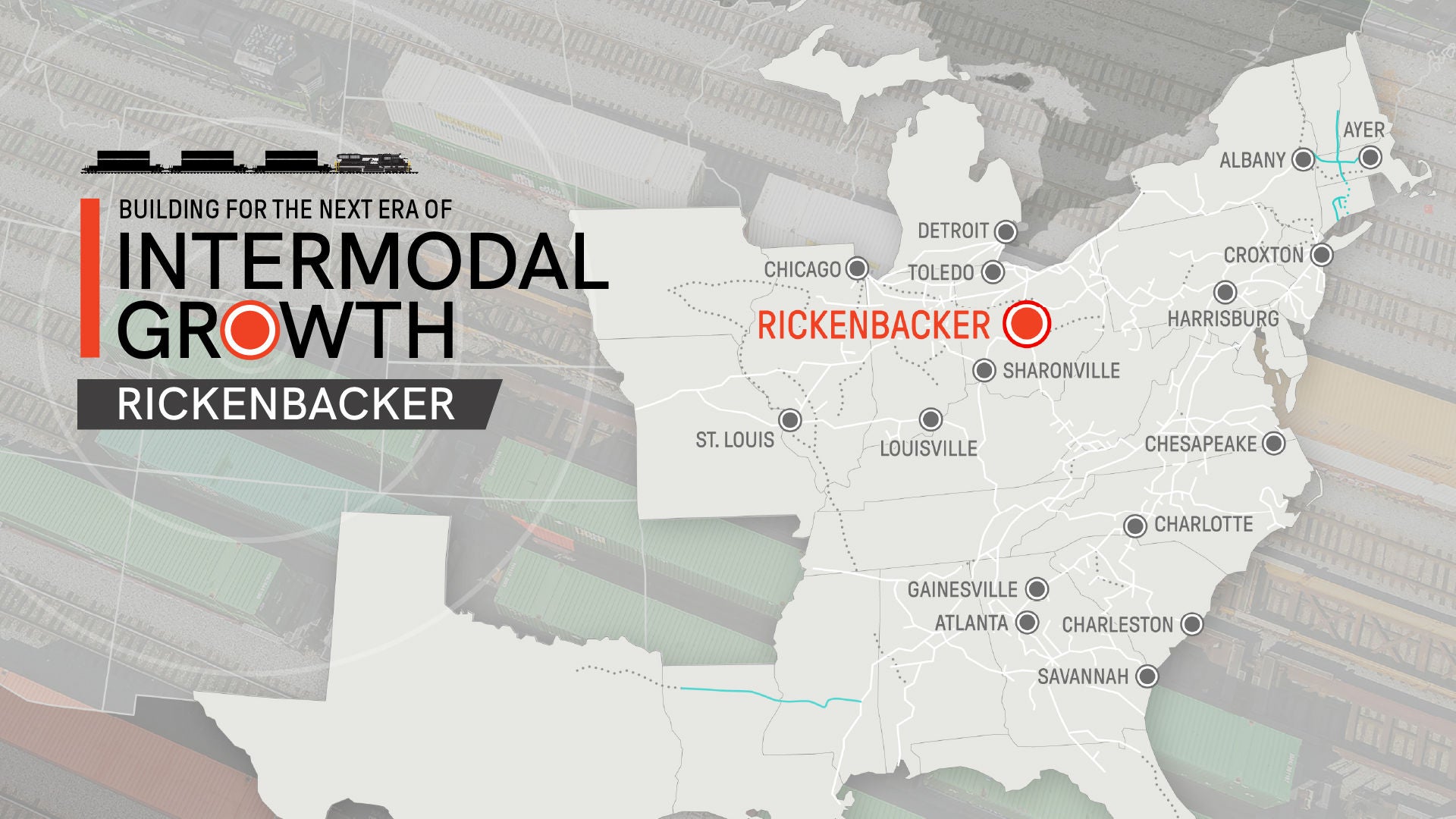
The first site-specific story in a series highlighting the investments shaping Norfolk Southern's intermodal network.
Key points
- Rickenbacker Intermodal Facility in Columbus, Ohio, is nearing completion of a major expansion to increase capacity, improve ramp operations and add flexibility across international lanes.
- Norfolk Southern has invested more than $30 million since the terminal opened in 2008.
- Pad track capacity is up 70% versus the original footprint; modeled capacity is growing from about 250,000 lifts per year in 2008 to roughly 410,000 once Phases 3 and 4 are complete.
- The facility handled 335,607 verified lifts in 2025.
- Rickenbacker gives Columbus-market customers the flexibility to route to either coast within a day’s drive of a large share of the U.S. population — inland-gateway optionality that lets them adjust as supply chains shift.
In the first article of this series, we shared how Norfolk Southern is investing ahead of demand across its 22-state network to expand capacity, strengthen port gateways and remove friction from the system.
Supply chains are changing quickly. Customers are evaluating gateway strategy, inland distribution, capacity, cost, reliability, and resilience with greater precision. At NS, that means investing in the facilities and corridors that help customers move freight with more confidence in a dynamic logistics environment.
At Rickenbacker Intermodal Facility in Columbus, Ohio, NS is doing exactly that.
The facility is nearing completion of a significant expansion project to increase capacity, improve ramp operations, and strengthen flexibility across several international intermodal lanes. The work builds on a long-term investment strategy at Rickenbacker, one of NS’ key inland gateways connecting the central Ohio market to global supply chains.
Since the terminal opened in 2008, NS has funded more than $30 million in physical capacity improvements across four expansion phases. Those investments have targeted the terminal's primary constraints over time, including support yard capacity, pad tracks, chassis and container parking, and related track infrastructure.
Compared with the terminal's original footprint, Rickenbacker's pad track capacity has increased by 70%. Once Phases 3 and 4 are complete, the terminal's modeled capacity will have grown from approximately 250,000 lifts per year in 2008 to approximately 410,000 lifts per year. In 2025, the facility handled 335,607 verified lifts.
“Rickenbacker’s growth has been intentional — we invest ahead of the constraint, not after it,” said Sr. Director Infrastructure, Capacity & Efficiency Ryan Hegarty. “Each phase has addressed the next bottleneck before it limited customers. With this latest expansion, we are adding support capacity, improving ramp performance and creating more flexibility for customers moving through one of our most important inland gateways.”
The latest phase adds more track and more space to stage containers. Some pieces are already in service, and the support yard expansion is expected to be complete later this summer.
Why Rickenbacker matters
Rickenbacker sits in one of North America's premier inland logistics markets. Within a day's drive of much of the U.S. population, the Columbus region is a major center for warehousing, distribution, retail fulfillment, manufacturing and global logistics.
"For customers, the market offers coast-to-coast access," said Alex Luc, Norfolk Southern Group Vice President, International Intermodal. "Freight moving through Columbus can connect to East Coast gateways like Norfolk and New York/New Jersey and to West Coast gateways serving trans-Pacific trade, so customers can adjust routing as supply chains evolve without changing the final destination."
That flexibility matters as customers manage port congestion, capacity, transit times, and cost. By strengthening Rickenbacker, NS is helping customers build more resilient supply chains in a region central to retail, consumer goods, e-commerce and agricultural exports — part of a broader commitment to investing where customers need capacity, reliability and choice.
Across the network, we’re expanding terminals, strengthening port connections and modernizing infrastructure, removing the friction that keeps freight moving predictably, and investing ahead of the growth we know is coming.
CONTINUE READING
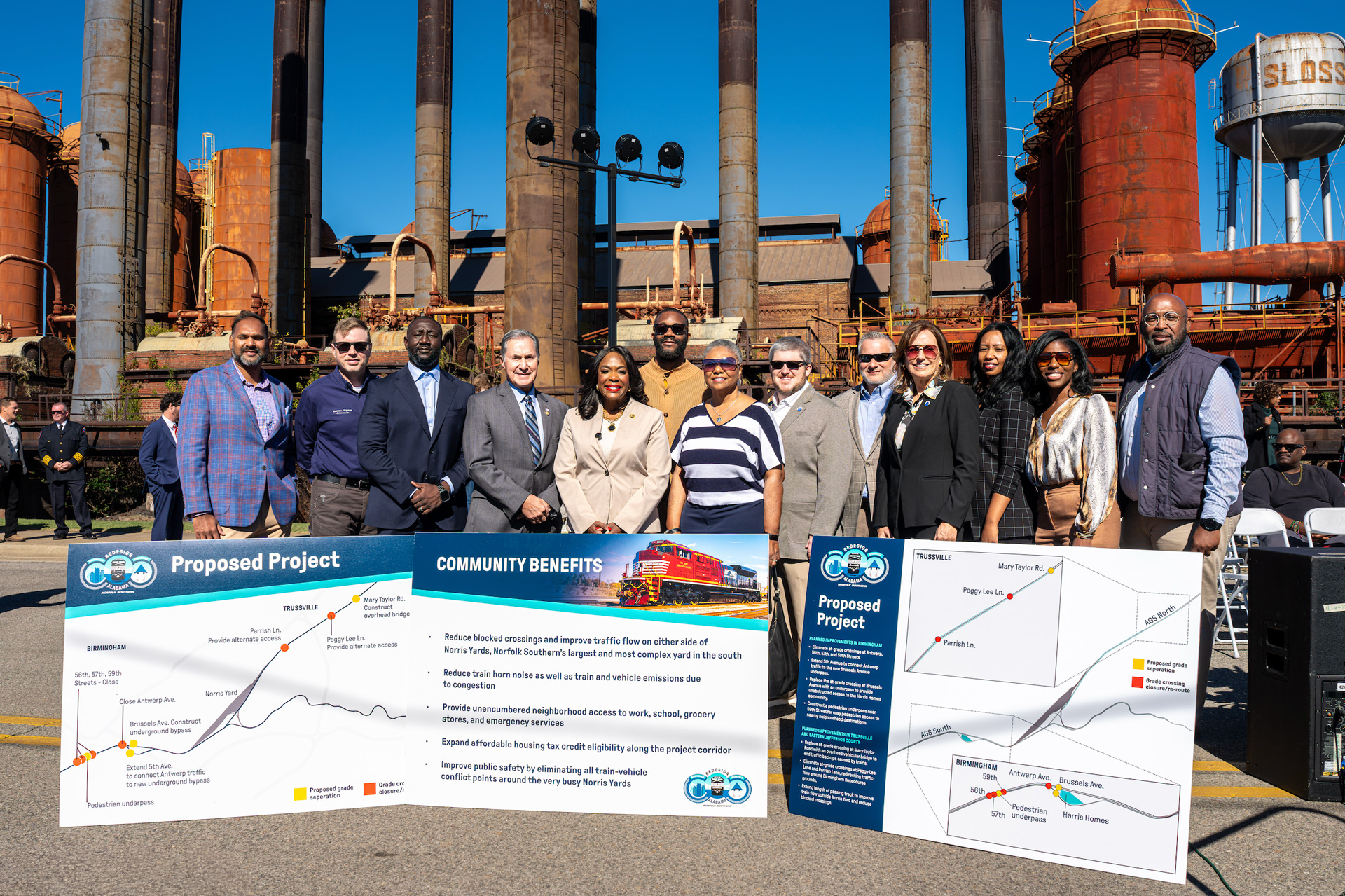
R.E.D.E.S.I.G.N Alabama advances plans for safer crossings and better neighborhood access in Birmingham
Oct 20, 2026
On October 19, Norfolk Southern joined federal, state, and local leaders in Birmingham at Sloss Furnaces to mark the selection of Kimley-Horn as the project’s engineering...
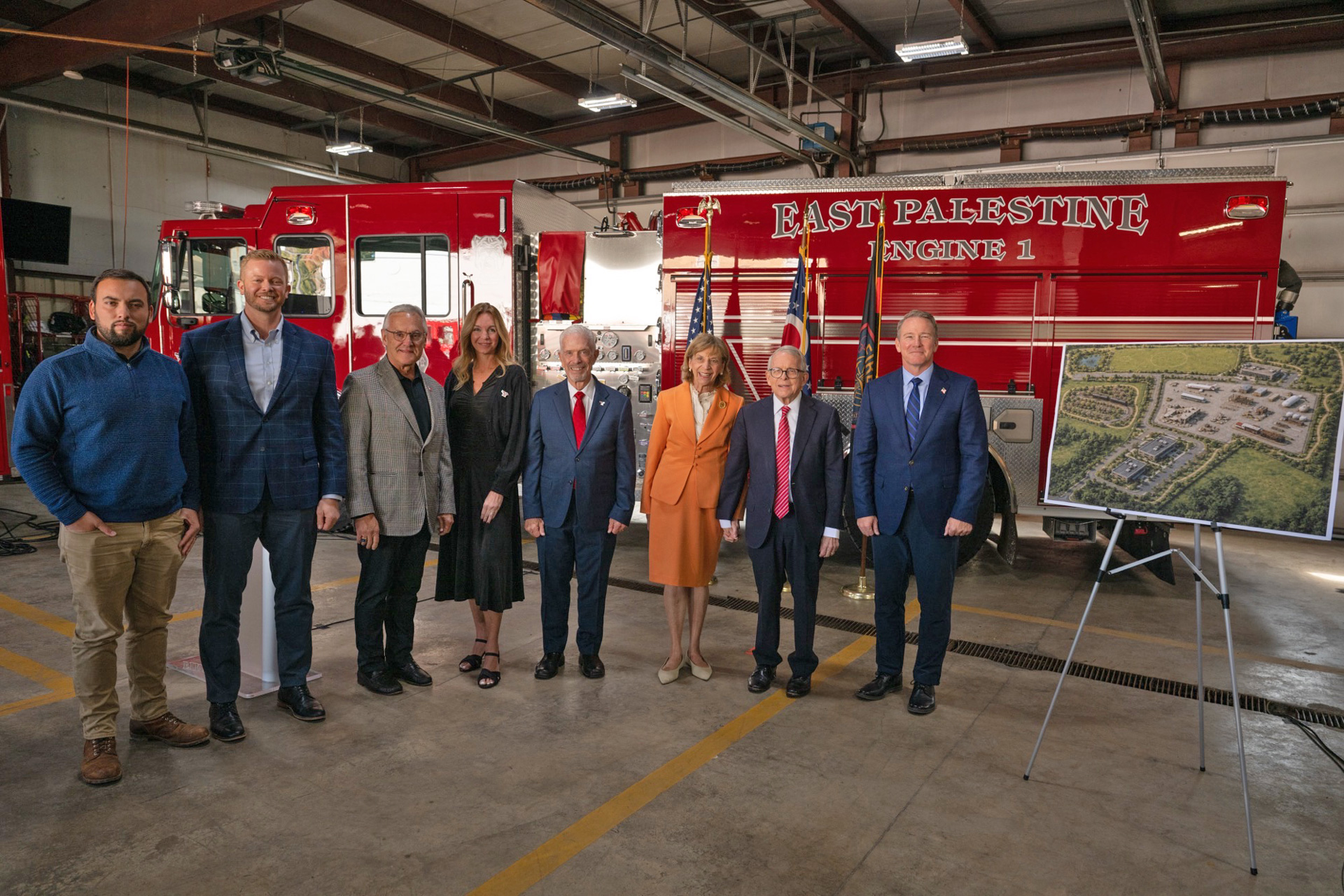
NS, partners mark progress on East Palestine training center
Oct 16, 2026
Norfolk Southern, Youngstown State University and federal, state and local partners in Ohio are advancing a regional resource designed to strengthen emergency preparednes...
How Norfolk Southern helps deliver Halloween, one pumpkin at a time
Oct 14, 2026
When it comes to Halloween spirit, Columbus, Ohio’s own Gus "@Squashcarver" Smithhisler knows how to make it shine — one pumpkin at a time. A self-taught artist...
Media Contacts
Are you a member of the media? Contact our media relations team.